
In an interview, note-taking competes directly with the follow-up question. The best question is nearly always the one prompted by what the person just said — and it does not get asked if you are still writing down the previous answer. Recording buys back that attention, and a transcript is what makes the recording usable when you sit down to write.
FOR INTERVIEWS
Listen properly. Quote accurately.
Record interviews, work from a searchable transcript, keep the audio for verification, and find themes across a whole set of conversations.
JOBS TO BE DONE
What you are trying to get done
Record and stay in the conversation
With the transcript running, you can listen for what is unsaid instead of transcribing what is.
Quote accurately
Work from the transcript and check the passage against the audio wherever the wording carries weight. Both live in the same note.
Find the theme across many interviews
Search a whole set of conversations for a phrase, or ask AI what recurs across the notes you select.
Keep an auditable trail
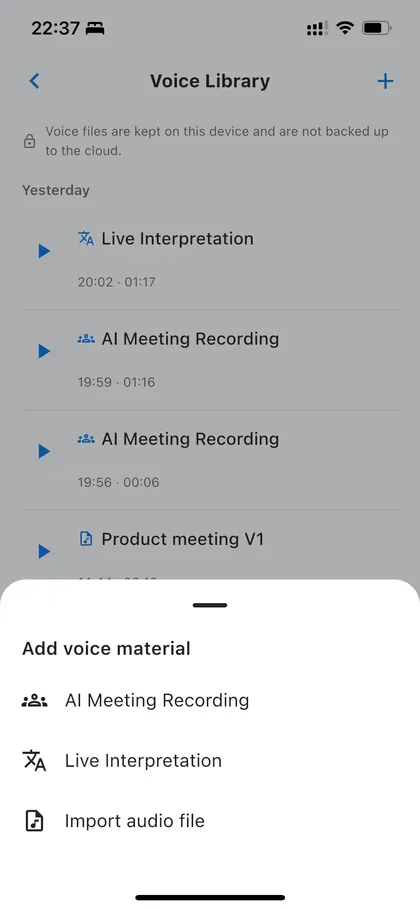
The recording library keeps the original audio next to the transcript, so a disputed quote can be checked rather than argued about.
IN PRACTICE
How this works across a session
01
Set up
Ask permission on the record, at the start of the recording, and state what the material will be used for. Say who is in the room.
02
Conduct
Let the transcript run and note only the moments you will want to return to. One timestamped marker beats a paragraph of hurried shorthand.
03
Write up
Correct the names and technical terms the transcript got wrong first — they are the errors that propagate — then pull your quotes and check each against the audio.
Transcripts are drafts, not evidence
Automatic transcription is reliable enough to work from and not reliable enough to publish unchecked. It is at its worst exactly where accuracy matters most: proper nouns, technical vocabulary, numbers, and speech that overlaps.
Treat the transcript as a fast first pass over the audio. Before a quote goes into anything published, play the passage. This takes seconds per quote and removes the category of error that damages trust.
- Fix names and jargon first — they recur throughout
- Verify every direct quotation against the recording
- Mark uncertain passages rather than smoothing them over
Consent is part of the method
Recording obligations vary by jurisdiction, and in several places all parties must agree. Capturing the agreement at the top of the recording itself, rather than in a separate email, keeps the permission attached to the material it covers.
Say what will happen to the recording: who will hear it, whether the person will be named, and what happens if they later want something withdrawn.
Working across a set of interviews
A single interview is easy to hold in your head. Twelve is not, and that is where a searchable set changes what is possible: you can ask what everyone said about one topic instead of remembering who mentioned it.
MemoFlow AI answers within the notes you choose, so you can scope a question to one project's interviews rather than to everything you have ever recorded.
Worth knowing: Follow local recording law and obtain consent from every participant. Transcription can misrender names, numbers, and technical terms — verify quotations against the audio before publishing.
Where to go next
Be the first to know when MemoFlow is ready.
No newsletter cadence—only the launch and essential product information.